Tuesday, December 7, 2010

Book Club Forum #10: Eat, Pray, Love

Book Selection Status: CURRENTLY READING

Month: December 2010
Genre: Memoir non-fiction:
Book of the Month: Eat, Pray, Love
Author: Elizabeth Gilbert
Question source: http://us.penguingroup.com/static/rguides/us/eat_pray_love.html

Discussion Questions:
 
1. Gilbert writes that “the appreciation of pleasure can be the anchor of humanity,” making the argument that America is “an entertainment-seeking nation, not necessarily a pleasure-seeking one.” Is this a fair assessment?

2. After imagining a petition to God for divorce, an exhausted Gilbert answers her phone to news that her husband has finally signed. During a moment of quietude before a Roman fountain, she opens her Louise Glück collection to a verse about a fountain, one reminiscent of the Balinese medicine man’s drawing. After struggling to master a 182-verse daily prayer, she succeeds by focusing on her nephew, who suddenly is free from nightmares. Do these incidents of fortuitous timing signal fate? Cosmic unity? Coincidence?

3. Gilbert hashes out internal debates in a notebook, a place where she can argue with her inner demons and remind herself about the constancy of self-love. When an inner monologue becomes a literal conversation between a divided self, is this a sign of last resort or of self-reliance?

 
4. When Gilbert finally returns to Bali and seeks out the medicine man who foretold her return to study with him, he doesn’t recognize her. Despite her despair, she persists in her attempts to spark his memory, eventually succeeding. How much of the success of Gilbert’s journey do you attribute to persistence?
 
5. Prayer and meditation are both things that can be learned and, importantly, improved. In India, Gilbert learns a stoic, ascetic meditation technique. In Bali, she learns an approach based on smiling. Do you think the two can be synergistic? Or is Ketut Liyer right when he describes them as “same-same”?

6. Gender roles come up repeatedly in Eat, Pray, Love, be it macho Italian men eating cream puffs after a home team’s soccer loss, or a young Indian’s disdain for the marriage she will be expected to embark upon at age eighteen, or the Balinese healer’s sly approach to male impotence in a society where women are assumed responsible for their childlessness. How relevant is Gilbert’s gender?

7. In what ways is spiritual success similar to other forms of success? How is it different? Can they be so fundamentally different that they’re not comparable?

 
8. Do you think people are more open to new experiences when they travel? And why?

 
9. Abstinence in Italy seems extreme, but necessary, for a woman who has repeatedly moved from one man’s arms to another’s. After all, it’s only after Gilbert has found herself that she can share herself fully in love. What does this say about her earlier relationships?

 
10. Gilbert mentions her ease at making friends, regardless of where she is. At one point at the ashram, she realizes that she is too sociable and decides to embark on a period of silence, to become the Quiet Girl in the Back of the Temple. It is just after making this decision that she is assigned the role of ashram key hostess. What does this say about honing one’s nature rather than trying to escape it? Do you think perceived faults can be transformed into strengths rather than merely repressed?

 
11. Sitting in an outdoor café in Rome, Gilbert’s friend declares that every city—and every person—has a word. Rome’s is “sex,” the Vatican’s “power”; Gilbert declares New York’s to be “achieve,” but only later stumbles upon her own word, antevasin, Sanskrit for “one who lives at the border.” What is your word? Is it possible to choose a word that retains its truth for a lifetime?


Tuesday, November 2, 2010

Book Club Forum #9: Sarah's Key

Book Selection Status: READ
Month: November 2010
Genre: Fiction Literature:
Book of the Month: Sarah's Key
Author: Tatiana de Rosnay

Discussion Questions:


1. What did you know about France’s role in World War II --- and the Vél d’Hiv round-up in particular --- before reading Sarah’s Key? How did this book teach you about, or change your impression of, this important chapter in French history?

2. Sarah’s Key is composed of two interweaving story lines: Sarah’s, in the past, and Julia’s quest in the present day. Discuss the structure and prose-style of each narrative. Did you enjoy the alternating stories and time-frames? What are the strengths or drawbacks of this format?

3. Per above: Which “voice” did you prefer: Sarah’s or Julia’s? Why? Is one more or less authentic than the other? If you could meet either of the two characters, which one would you choose?

4. How does the apartment on la rue de Saintonge unite the past and present action --- and all the characters --- in Sarah’s Key? In what ways is the apartment a character all its own in?

5. What are the major themes of Sarah’s Key?

6. de Rosnay’s novel is built around several “key” secrets which Julia will unearth. Discuss the element of mystery in these pages. What types of narrative devices did the author use to keep the keep the reader guessing?

7. Were you surprised by what you learned about Sarah’s history? Take a moment to discuss your individual expectations in reading Sarah’s Key. You may wish to ask the group for a show of hands. Who was satisfied by the end of the book? Who still wants to know --- or read --- more?

8. How do you imagine what happens after the end of the novel? What do you think Julia’s life will be like now that she knows the truth about Sarah? What truths do you think she’ll learn about her self?

9. Among modern Jews, there is a familiar mantra about the Holocaust; they are taught, from a very young age, that they must “remember and never forget” (as the inscription on the Rafle du Vél d’Hiv) Discuss the events of Sarah’s Key in this context. Who are the characters doing the remembering? Who are the ones who choose to forget?

10. What does it take for a novelist to bring a “real” historical event to life? To what extent do you think de Rosnay took artistic liberties with this work?

11. Why do modern readers enjoy novels about the past? How and when can a powerful piece of fiction be a history lesson in itself ?

12. We are taught, as young readers, that every story has a “moral”. Is there a moral to Sarah’s Key? What can we learn about our world --- and our selves --- from Sarah’s story?

Sunday, October 3, 2010

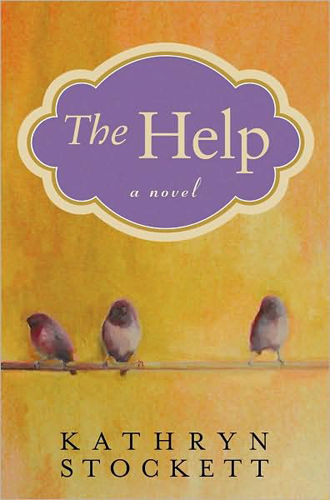
Book Club Forum #8: The Help

Book Selection Status: READ
Month: October 2010
Genre: Fiction Literature:
Book of the Month: They Help
Author: Kathyrn Stockett

Discussion Questions:
1. Who was your favorite character? Why?

2. What do you think motivated Hilly? On the one hand she is terribly cruel to Aibileen and her own help, as well as to Skeeter once she realizes that she can't control her. Yet she's a wonderful mother. Do you think that one can be a good mother but, at the same time, a deeply flawed person?
3. Like Hilly, Skeeter's mother is a prime example of someone deeply flawed yet somewhat sympathetic. She seems to care for Skeeter--and she also seems to have very real feelings for Constantine. Yet the ultimatum she gives to Constantine is untenable; and most of her interaction with Skeeter is critical. Do you think Skeeter's mother is a sympathetic or unsympathetic character? Why?
4. How much of a person's character would you say is shaped by the times in which they live?
5. Did it bother you that Skeeter is willing to overlook so many of Stuart's faults so that she can get married, and that it's not until he literally gets up and walks away that the engagement falls apart?
6. Do you believe that Minny was justified in her distrust of white people?

7. Do you think that had Aibileen stayed working for Miss Elizabeth, that Mae Mobley would have grown up to be racist like her mother? Do you think racism is inherent, or taught?

8. From the perspective of a twenty-first century reader, the hairshellac system that Skeeter undergoes seems ludicrous. Yet women still alter their looks in rather peculiar ways as the definition of "beauty" changes with the times. Looking back on your past, what's the most ridiculous beauty regimen you ever underwent?

9. The author manages to paint Aibileen with a quiet grace and an aura of wisdom about her. How do you think she does this?

10. Do you think there are still vestiges of racism in relationships where people of color work for people who are white? Have you heard stories of parents who put away their valuable jewelry before their nanny comes? Paradoxically, they trust the person to look after their child but not their diamond rings?

11. What did you think about Minny's pie for Miss Hilly? Would you have gone as far as Minny did for revenge?

Wednesday, September 1, 2010

Book Club Forum #7: Finny

Book Selection Status: READ
Month: September 2010
Genre: Fiction Literature:
Book of the Month: Finny
Author: Justin Kramon
Question source: http://justinkramon.com/ReadingGroupQuestions.html

Discussion Questions:

1. We live with Finny for more than two decades in the book, seeing her at some of her best and worst moments. In what ways would you say Finny changes over the course of the book? In what ways does she stay the same? Do you think she “grows up” in the course of the novel?

2. Who are your favorite characters in the novel? What did you like about them? What particular scenes or moments in the book made you feel an attachment to them? What traits did you admire or disapprove of in them?

3. Judith is a complicated and controversial figure in the novel. Immediately, when Finny meets her at the Thorndon boarding school, Finny acknowledges her beauty, and also that Judith was “more like a grown woman than a girl.” Throughout the novel, Finny is aware of Judith’s physicality: her hair, her clothing, her breasts. As you read, what conclusions did you reach about Judith and her beauty? Do you like Judith as a person? Do you feel sympathetic to her? In what ways would you say Finny was correct about Judith being old for her age? In what ways would you say Finny was mistaken? What changes occur in Judith’s character over the course of the novel?

4. The theme of families plays a large role in the book. We see Finny’s difficult relationship with her family in the opening of the book, and the way she creates a kind of substitute family for herself, pieced together from the various people she meets: Mr. Henckel, Poplan, Judith. Would you say that Finny’s feelings about her biological family change over the course of the book? Do you think she becomes more or less understanding of them? Also, do you think her feelings about family in general change? How so? How are her views on family influenced by her experiences with others? Her mother? Sylvan? Earl and Mona? Any other characters?

5. Another big theme in the book is romantic love. Early in the book, thinking of her love for Earl, Finny comes upon the realization that “this feeling, this endless, inconsolable longing, would forever be a part of her life, a part of what it meant to truly love...in the end she could never say whether it was good or bad.” How would you say that the ideas in this passage play out over the course of the book? Is Finny’s love for Earl a “good” thing? Or is it more complicated? What do you think the novel’s view of romantic love is? Compare this passage to the passages on love at the end of the novel.

6. Finny often feels misunderstood in the book. She has trouble explaining herself to her parents, but also to her high school principal, Mrs. Barksdale, and to the man who cuts her hair in Paris, and to the men she dates after she moves to Boston. Why do you think she so often feels this frustration about misunderstanding? What do you think the importance of misunderstanding is in the novel? Are there also experiences of feeling understood?

7. Would you say that the book is told from the point of view of an old or young person? Is the language at the beginning of the book different from the language toward the end of the book? Similar? In what ways?

8. How would you characterize the tone of the book? Light? Heavy? How would you say that the tone of the language affects the more emotional scenes in the novel?

9. Do you think the book takes an optimistic or pessimistic view of people?

10. How would you characterize the humor in the book? Is it light-hearted? Dark? What does the humor call attention to? For example, you might look at the scene in the funeral home, when the Haberdashers are exchanging sneezes. Why would the author choose to put a comic scene in the middle of such a tragic period in Finny’s life? Are there other comic scenes that support or contradict your thoughts about this scene?

11. In the first chapter of Book 3, “Finny Gets a Glimpse into the Lives of Her Friends,” we learn of a number of changes in the lives of all the major characters. Examine how the lives of Carter, Judith, Sylvan, and Finny change over the fifteen years that separate Book 2 and Book 3. How would you characterize these changes? What are the attitudes the different characters take toward the ways their lives have gone?

12. Finny’s date with Brad Miller ends in a way she couldn't have expected, and Finny is troubled by her own part in what happened: “She felt a rush of shame for how she’d acted. Like a horny teenager, she thought. So frivolous. It wasn’t that Finny objected to sex, even casual sex; it was just the fact of getting it in this childish way, all the drinking and pawing at each other, the bribe of a fancy meal.” Why do you think Finny reacts this way? Do you think she’s right? How does it compare to other sex scenes in the book – with Earl, for instance, or when Finny and Earl chase the thief into the “Maison des Faintasies” in Paris? Do you think the book takes a certain view of sex?

13. Compare Finny to other books you know about “growing up.” How is it similar or different? How is a book about a young woman’s coming of age different than a book about a man’s?

14. What do you think about a man writing a book entirely from the point of view of a woman? Is it possible for a writer to make this shift? Does Kramon capture the feeling of being a woman? Does he miss things? What do you think, in general, of fiction writers writing about people who aren’t like them, or events outside of their experience?

Monday, August 2, 2010

Book Club Forum #6: The Condition

Book Selection Status: READ
Month: August 2010
Genre: Fiction Literature:
Book of the Month: The Condition
Author: Jennifer Haigh
Question source: http://www.jenniferhaigh.com/condition_guide.html

Discussion Questions:

1. Discuss the significance of the book's title. What else might it refer to other than Gwen's Turner's syndrome?

2. In what ways does Gwen's condition reverberate throughout the McKotch family? What do Frank and Paulette's differing opinions about how to treat Gwen's condition reveal about their personalities and also about their relationship?

3. Paulette and Frank's marriage was rife with misunderstandings on both sides. Was one person more to blame than the other for their break-up? Of the two, who did you find to be more sympathetic? Why does Billy blame his father for the divorce?

4. What was your impression of Paulette? Do you suppose the author meant for her to be a likeable character?

5. Discuss Paulette's relationship with Donald and her infatuation with Gil Pyle. What did Paulette find in her relationship with Donald that she did not with Frank?

6. Frank often compares his working-class background in a Pennsylvania mining town with Paulette's pedigreed family, musing that everything comes down to upbringing. How does his children's upbringing affect the paths they take in life? Was Frank a bad father, as Paulette seemed to believe?

7. On the surface the three McKotch children are extremely different. In what ways, if any, are they alike?

8. Why does Gwen distance herself from her family both physically and emotionally? Why does she ultimately decide to forgive Rico and Scott but not her mother?

9. Do you agree with Paulette's decision to send Scott to St. Raphael to bring Gwen home? Why is it so difficult for Paulette to believe that a man might be attracted to Gwen? Is she merely being a protective mother?

10. Gwen ends up living on St. Raphael, worlds away from her isolated life in Pittsburgh and Concord before that. What does she find on the Caribbean island that she hasn't anywhere else? Why does she reconcile with Rico?

11. What prompts Billy to finally reveal to his family that he's gay? How do Paulette and Frank each react to the news?

12. By the time the family reconvenes at the Captain's House, what realizations has Scott come to about his life—professionally and romantically, as well as his role as a father? In what ways have the others changed by the time of the reunion?

13. Sense of place is an important theme in The Condition. How do the opening scenes at the Captain's House set the tone for the rest of the novel? What do the main characters' living spaces, from Paulette's 200-year-old Concord house to Billy's meticulously decorated New York City apartment, reveal about them?

14. What do you suppose the future holds for the five members of the McKotch family?

15. Jennifer Haigh unfolds the narrative from the alternating perspectives of Frank, Paulette, and their three children. In what ways did this enhance your reading of the story?

16. Overall, what are your thoughts about the way the author presents the McKotches? Did you find their story to be a realistic and believable one?

Thursday, July 1, 2010

Book Club Forum #5: The Same Kind of Different as Me

Book Selection Status: READ
Month: July 2010
Genre:  Non-fiction Literature:
Book of the Month: The Same Kind of Different as Me
Authors: Ron Hall, Denver Moore, Lynn Vincent
Question source: http://www.litlovers.com/guide_same_kind_of_different.html


Discussion Questions:

1.  At the beginning of the book, what kind of person is Ron Hall? How would you describe him (how does  he describe himself)?

2.  Why does he agree to volunteer at the homeless shelter, and what is his initial reaction in doing so?

3. Talk about the trajectory of Denver Moore's life. What events have landed him in the homeless shelter?

4.  Discuss the differences between his life and Ron Hall's. What is Denver's world view?

5.  Talk about Deborah Hall? What inspires her life? What does she think of Denver Moore?

6.  Eventually, Denver and Ron, two men who have lived vastly different lives, become close friends. What do the two see in one another? What draws them together?

7.  What are the symbolic implications of the conversation about how white men fish, especially their catch-and-release method? What does that conversation say about each man, and what is the underlying message that Denver is trying to pass onto Ron?

8.  What is the meaning of the book's title, "Same Kind of Difference as Me"? What does it refer to?

9.  How do both men change by the end of the book? What do they learn from or teach each other?

10.  This is a story about how hate and prejudice can be overcome by love and grace. How difficult is that achievement in most of our lives? What can this book teach us?

11.  Does this book inspire you? If so, in what ways?

Tuesday, June 1, 2010

Book Club Forum 4: Cleopatra's Daughter: A novel

Book Selection Status: READ
Month: June 2010
Genre: Historical Fiction Literature:
Book of the Month: Cleopatra's Daughter: A novel
Author: Michelle Moran
Question source: http://www.michellemoran.com/

Discussion Questions:
1.  What, if any, elements of the ancient Roman world seem similar to life today?

2.  In the beginning of the novel, Octavian comes across as a ruthless man willing to do whatever it takes to stay in power. Does anything change as the story progresses? How do you feel about him in the end? Did your feelings change at all? Why do you think he treats Selene the way he does as the novel closes?

3.  Selene has a complex relationship with Julia. Do her feelings about Julia change during the course of the novel? If so, why?

4.  Octavian/Augustus governed Rome for decades; sometimes with guile, often with ruthless force. In the novel we see his use of assassinations (of rivals, real and imagined), as well as collective punishment following the attempt on his life. Can this leadership style be justified by his focus on order and stability? In their quest for these, what boundaries should leaders never cross?
    5.  Selene has two romantic interests in the novel. How does her attitude and character change as she matures and passes from one romance to the other?

    6.  Octavia shows tremendous compassion for the adopted children placed in her care. How would you have responded to a betrayal like that of Antony?

    7.  The slave trials described in the novel were real examples of Roman collective punishment. How does the administration of justice in classical times differ from the modern ones we know today?

    8. Was the Roman system of law, administration, learning and empire a net gain or net loss for those that it conquered?

    9.  Egypt has always fascinated outsiders, including in this novel, Julia. Why?

    10.  Omen, superstitions, and protection by family spirits play a significant part in the novel and in Roman life. What is the source of these widespread human traditions, and how do such emotions and habits express themselves today?

    11. How does the Roman attitude to marriage, sex, and promiscuity compare to our own?