Tuesday, January 3, 2012

Book Club Forum #23: Girl In Translation

Book Selection Status:  READ 
Month: January 2012
Genre: Fiction
Book of the Month: Girl In Translation
Author: Jean Kwok
Discussion Questions:
    1. Throughout Girl in Translation, the author uses creative spelling to show Kimberly’s mis-hearing and misunderstanding of English words. How does the language of the novel evolve as Kimberly grows and matures? Do you see a change in the respective roles that English and Chinese play in the narrative as it progresses?

    2. The word translation figures prominently in the title of the novel, and learning to translate between her two languages is key to Kimberly’s ability to thrive in her new life. Does she find herself translating back and forth in anything other than language? Clothing? Priorities? Expectations? Personality or behavior? Can you cite instances where this occurs, and why they are significant to the story as a whole?

    3. Kimberly has two love interests in the book. How are the relationships that Matt and Curt offer different? Why do you think she ultimately chooses one boy over the other? What does that choice say about her? Can you see a future for her with the other boy? What would change?

    4. In many ways Kimberly takes over the position of head of household after her family moves to New York. Was this change in roles inevitable? How do you imagine Ma feels about it? Embarrassed? Grateful? In which ways does Ma still fulfill the role of mother?

    5. Kimberly often refers to her father, and imagines how her life might have been different, easier, if he had lived. Do you think she is right?

    6. Kimberly’s friend Annette never seems to grasp the depths of Kimberly’s poverty. What does this say about her? What lesson does this experience teach Kimberly? Is Kimberly right to keep the details of her home life a secret?

    7. Kimberly believes that devoting herself to school will allow her to free her family from poverty. Does school always live up to her expectations? Where do you think it fails her? How does it help her succeed? Can you imagine the same character without the academic talent? How would her life be different? What would remain the same? Is Kimberly right to believe that all of her potential lies in her talent for school? Must qualities like ambition, drive, hope, and optimism go hand in hand with book smarts?

    8. Think about other immigrant stories. How is Kimberly’s story universal? How is it unique? How does Kimberly’s Chinese-American story compare to other immigrant stories? Would it change if she were from a different country or culture?

    9. Kimberly lives in extreme poverty. Was anything about her circumstances surprising to you? How has reading Girl in Translation affected your views of immigration? How can you apply these lessons in your community?

    10. The story is set in the 1980s. Do you think immigrant experiences are much different today? What has changed? What has remained the same?

      Saturday, December 3, 2011

      Book Club Forum #22: The Paris Wife

      Book Selection Status: READ
      Month: December 2011
      Genre: Historical Fiction
      Book of the Month: The Paris Wife
      Author: Paula McLain
      Question source: http://www.randomhouse.com/rhpg/features/paula_mclain/author/

      Discussion Questions:

        1. In many ways, Hadley's girlhood in St. Louis was a difficult and repressive experience. How do her early years prepare her to meet and fall in love with Ernest? What does life with Ernest offer her that she hasn't encountered before? What are the risks?

        2. Hadley and Ernest don't get a lot of encouragement from their friends and family when they decided to marry. What seems to draw the two together? What are some of the strengths of their initial attraction and partnership? The challenges?

        3. The Ernest Hemingway we meet in THE PARIS WIFE—through Hadley's eyes—is in many ways different from the ways we imagine him when faced with the largeness of his later persona. What do you see as his character strengths? Can you see what Hadley saw in him?

        4. The Hemingways spontaneously opt for Paris over Rome when the get key advice from Sherwood Anderson. What was life like for them when they first arrived? How did Hadley's initial feelings about Paris differ from Ernest's and why?

        5. Throughout THE PARIS WIFE, Hadley refers to herself as "Victorian" as opposed to "modern." What are some of the ways she doesn't feel like she fits into life in bohemian Paris? How does this impact her relationship with Ernest? Her self-esteem? What are some of the ways Hadley's "old-fashioned" quality can be seen as a strength and not a weakness?

        6. Hadley and Ernest's marriage survived for many years in Jazz-Age Paris, an environment that had very little patience for monogamy and other traditional values. What in their relationship seems to sustain them? How does their marriage differ from those around them? Pound's and Shakespeare's? Scott and Zelda's?

        7. Most of THE PARIS WIFE is written in Hadley's voice, but a few select passages come to us from Ernest's point of view. What impact does getting Ernest's perspective have on our understanding of their marriage? How does it affect your ability to understand him and his motivations in general?

        8. What was the role of literary spouses in 1920's Paris? How is Hadley challenged and restricted by her gender? Would those restrictions have changed if she had been an artist and not merely a "wife"?

        9. At one point, Ezra Pound warns Hadley that it would be a dire mistake to let parenthood change Ernest. Is there a nugget of truth behind his concern? What are some of the ways Ernest is changed by Bumby's birth? What about Hadley? What does motherhood bring to her life, for better or worse?

        10. One of the most wrenching scenes in the book is when Hadley loses a valise containing all of Ernest's work to date. What kind of turning point does this mark for the Hemingway's marriage? Do you think Ernest ever forgives her?

        11. When the couple moves to Toronto to have Bumby, Ernest tries his best to stick it out with a regular "nine-to-five" reporter's job, and yet he ultimately finds this impossible. Why is life in Toronto so difficult for Ernest?

        12. Why does Hadley agree to go back to Paris earlier than they planned, even though she doesn't know how they'll make it financially? How does she benefit from supporting his decision to make a go at writing only fiction?

        13. Hadley and Ernest had similar upbringings in many ways. What are the parallels, and how do these affect the choices Hadley makes as a wife and mother?

        14. In THE PARIS WIFE, when Ernest receives his contract for In Our Time, Hadley says, "He would never again be unknown. We would never again be this happy." How did fame affect Ernest and his relationship with Hadley?

        15.  The Sun Also Rises is drawn from the Hemingways' real-life experiences with bullfighting in Spain. Ernest and his friends are clearly present in the book, but Hadley is not. Why? In what ways do you think Hadley is instrumental to the book regardless, and to Ernest's career in general?

        16. How does the time and place—Paris in the 20's—affect Ernest and Hadley's marriage? What impact does the war, for instance, have on the choices and behavior of the expatriate artists surrounding the Hemingways? Do you see Ernest changing in response to the world around him? How, and how does Hadley feel about those changes?

         17. What was the nature of the relationship between Hadley and Pauline Pfeiffer? Were they legitimately friends? How do you see Pauline taking advantage of her intimate position in the Hemingway's life? Do you think

        18. Hadley is naïve for not suspecting Pauline of having designs on Ernest earlier? Why or why not?

        19. It seems as if Ernest tries to make his marriage work even after Pauline arrives on the scene. What would Hadley it have cost Hadley to stick it out with Ernest no matter what? Is there a way she could have fought harder for her marriage?

        20. In many ways, Hadley is a very different person at the end of the novel than the girl who encounters Ernest by chance at a party. How do you understand her trajectory and transformation? Are there any ways she essentially doesn't change?

        21. When Hemingway's biographer Carlos Baker interviewed Hadley Richardson near the end of her life, he expected her to be bitter, and yet she persisted in describing Ernest as a "prince." How can she have continued to love and admire him after the way he hurt her?

        22. Ernest Hemingway spent the last months of his life tenderly reliving his first marriage in the pages his memoir, A Moveable Feast. In fact, it was the last thing he wrote before his death. Do you think he realized what he'd truly lost with Hadley?

        Tuesday, November 1, 2011

        Book Club Forum #21: Lady Undertaker

        Book Selection Status: READ
        Month: November 2011
        Genre: Fiction
        Book of the Month: Lady Undertaker
        Author: Lyn Johnson and Lisa Branch-Tucker
        Question source: http://www.book-clubs-resource.com/running/discussion-questions.php

        Discussion Questions:

        1. What was unique about the setting of the book and how did it enhance or take away from the story?

        2. What specific themes did the author emphasize throughout the novel? What do you think he or she is trying to get across to the reader?

        3. Do the characters seem real and believable? Can you relate to their predicaments? To what extent do they remind you of yourself or someone you know?

        4. How do characters change or evolve throughout the course of the story? What events trigger such changes?

        5. In what ways do the events in the books reveal evidence of the author's world view?

        6. Did certain parts of the book make you uncomfortable? If so, why did you feel that way?

        Monday, October 3, 2011

        Book Club Forum #20: The Heart Specialist

        Book Selection Status:  READ
        Month: October 2011
        Genre:  Fiction Literature
        Book of the Month: The Heart Specialist
        Author: Claire Holden Rothman
        Question source: http://www.bookmovement.com/app/readingguide/view.php?ratings&readingGuideID=18157

        Discussion Questions:

        1. One of the central images of the novel is a misshapen, three‐chambered human heart in a laboratory bottle. Human hearts normally have four chambers – two atria and two ventricles – but the Howlett Heart, as it is called in the book, has only one ventricle, which confuses Agnes
        White when she discovers it in the McGill museum of pathology. At first she thinks it is reptilian or perhaps amphibian, but eventually she realizes it's human, albeit gravely defective. She publishes an article about it in a scholarly journal, a first step in what will become her celebrated
        career in heart medicine. The deformed heart is also the first of a series of clues leading to her missing father, and it figures in her discovery of love at the novel’s end. What does the Howlett Heart evoke for you? What are its functions in the novel?

        2. The Heart Specialist tells the story of a young woman trying to enter medicine at a time when
        this was nearly impossible. Other characters in the novel are marginalized as well. Agnes’s lab
        assistant Jakob Hertzlich is marginalized because of his religion. Her colleague Dugald Rivers is
        marginalized due to sexual orientation. These characters are all hurt by a society with overly
        rigid definitions of social roles. Which characters in the novel are marginal? Which are
        mainstream? What impact does this have on their fates?

        3. Vision is a motif in this novel. Agnes White is myopic. George Skerry is constantly removing her
        spectacles and rubbing the lenses clean. Honoré Bourret is half‐blind when Agnes finally meets
        him at the novel`s end, and shortly after that meeting, Agnes declares, ``I just opened my eyes
        for the first time in fifty years. It certainly took me long enough. I had built my life on a dream.``
        Discuss vision and its symbolic importance in this book.

        4. In section VI of the novel, entitled War, Agnes White laments that she has been forced, due to
        her sex, to stay in Montreal, while her male colleagues head off to France to serve in the First
        World War. She is deeply jealous of them. After reading letters from Dugald Rivers, however,
        her view shifts. ``From that day until I died,`` she declares, ``I would offer up prayers of thanks
        for the good fortune of having been born a woman.`` Agnes White has conflicting feelings about
        womanhood. Would you characterize her as a feminist?

        5. Agnes White pursues a career in medicine in large part as an attempt to enter the world of her
        missing father. The father quest is an archetypal story form, found in ancient myth and legend.
        In the Greek myths, for instance, Theseus goes in search of his missing father, Aegeus, and in the
        process proves himself a hero. Likewise, young Telemachus searches for his missing father
        Odysseus, and proves his own courage and worth. Discuss the ways in which The Heart Specialist
        is a father quest, with a twist.

        6. Love is hard to achieve in this novel filled with hearts. Is there a successful love relationship
        here?

        7. The Heart Specialist was inspired by one of Canada`s first female physicians, Doctor Maude
        Abbott. Does this fact change your approach to the novel? How?

        8. The act of story‐telling is important in The Heart Specialist. Twice, Agnes White recounts the
        story of her life: the first time to William Howlett in Baltimore, and the second to George Skerry
        by the river in Saint Andrew`s East, right at the novel`s end. Why are these two scenes
        important in the novel?

        9. Compare the two sisters, Laure and Agnes. One picked a more traditional female life, the other
        charted new waters. What were their fates? Now add George Skerry into the mix. What kinds of
        options for happiness and fulfillment did women have in the society depicted in this novel?

        10. This novel opens with death, and death seems to follow Agnes White wherever she goes. In
        part, this is because of her profession. But could the death be metaphoric as well as literal?
        Must Agnes White die in this novel, to be figuratively reborn?

        Friday, September 2, 2011

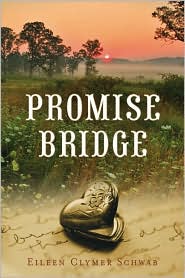
        Book Club Forum #19: Promise Bridge

        Book Selection Status:  READ
        Month: September 2011
        Genre: Historical Fiction Literature
        Book of the Month: Promise Bridge
        Author: Eileen Clymer Schwab
        Question source:

        Discussion Questions:

        1. What did the promise bridge mean to you and how did it expand as the novel progressed?

        2. Livie's move to freedom can be seen in a physical journey. Do you think Hannah and Colt discover a kind of freedom? How so?

        3. Why did Hannah feel more alive in Mud Run than she did in the main house?

        4. Several circumstances occur during the story that change Colt in Hannah's eyes. What instances are memorable and how did they change her perception of him as a man?

        5. Elements of friendship, suspense and romance carry the story, with a few surprises along the way. How did the mix of these elements affect the pace of the story, and which plot twist did you least expect?

        Wednesday, August 3, 2011

        Book Club Forum #18: State of Wonder

        Book Selection Status: READ
        Month: August 2011
        Genre: Fiction
        Book of the Month: State of Wonder
        Author: Ann Patchett

        Discussion Questions:

        1. How would you describe Marina Singh? How has the past shaped her character? Discuss the anxieties that are manifested in her dreams.


        2. “Marina was from Minnesota. No one ever believed that. At the point when she could have taken a job anywhere she came back because she loved it here. This landscape was the one she understood, all prairie and sky.” What does this description say about the character?

        3. Talk about Marina’s relationship with her boss, Mr. Fox. Would you call what they share love? Do they have a future? Why does he want Marina to go to the Amazon? What propels her to agree?

        4. What drew Marina to her old mentor, Annik Swenson? Compare and contrast the two women. How does Annick see Marina? Barbara Bovender, one of Annik’s caretakers/gatekeepers tells Marina, “She’s such a force of nature. . . . a woman completely fearless, someone who sees the world without limitations.” Is this a fair assessment of Annik? How would you describe her? How has the elderly doctor’s past shaped the person she is and the choices she has made?

        5. Describe the arc of Marina and Annik’s relationship from the novel’s beginning to its end. Do you like these women? Did your opinion of them change as the story unfolded? Why didn’t Marina ever tell anyone the full story of her early experience with Annick?

        6. Consider Annik’s research in the Amazon. Should women of any age be able to have children? What are the benefits and the downsides? Why does this ability seem to work in the Lakashi culture? What impact does this research ultimately have on Marina? Whether you are a man or woman, would you want to have a child in your fifties or sixties? How far should modern science go to “improve” on nature?

        7. In talking about her experiences with the indigenous people, Annik explains, “the question is whether or not you choose to disturb the world around you; or if you choose to go on as if you had never arrived. “ How does Marina respond to this? Did Annik practice what she preached? How do these women’s early choices impact later events and decisions? How does Annik’s statement extend beyond the Amazon to the wider world? Would you rather make a “disturbance” in life, or go along quietly?

        8. Talk about the Lakashi people and the researchers. How do they get along? Though the scientists try not to interfere with the natives’ way of life, how does their being there impact the Lakashi? What influence do the Lakashi have on the scientists?

        9. Would you be able to live in the jungle as the researchers and natives do? Is there an appeal to going back to nature; from being removed from the western constraints of time and our modern technological society?

        10. What role does nature and the natural world—the jungle, the Amazon River—play in Marina’s story? How does the environment influence the characters—Marina, Annik, Milton, Anders, Easter, and the others? Annik warns Marina, “It’s difficult to trust yourself in the jungle. Some people gain their bearings over time but for others that adjustment never comes.” Did Marina ultimately “gain her bearings”?

        11. Marina travels into hell, into her own Conradian “heart of darkness.” What keeps her in the jungle longer than she’d ever thought she’d stay? How does this journey transform her and her view of herself and the world? Will she ever return—and does she need to?

        12. What is your opinion of the choices Marina made regarding Easter? What role did the boy play in the story? Do you think Marina will ever have the child—one like Easter—that she wants?

        13. What do you think happens to Marina after she returns home?

        14. State of Wonder is rich in symbolism. Identify a few—for example, Eden Prairie (Marina’s Minnesota home), Easter (the young deaf native boy), Milton (the Brazilian guide)—and talk about how Ann Patchett uses them to deepen the story.

        15. State of Wonder raises questions of morality and principle, civilization, culture, love, and science. Choose a few events from the book to explore some of these themes.

        16. What is the significance of the novel’s title, State of Wonder?

        Thursday, July 7, 2011

        Book Club Forum #17: Save Me

        Book Selection Status: READ

        Month: July 2011
        Genre: Fiction - Thriller
        Book of the Month: Save Me
        Author: Lisa Scottoline
        Question source:  http://scottoline.com/Site/Bookclubs/

        Discussion Questions:

        1. SAVE ME explores the mother and child relationship, at its heart. What do you think defines a mother? How is a mother and child relationship different than any other relationship? Look at other forms of culture, like art, for example. How many depictions are there of mother and child? And how many of father and child? Are we discriminating against fathers, or diminishing them, by all this talk of the mother-child bond? And by doing so, do we create a self-fulfilling prophecy?

        2. In SAVE ME, Melly is the victim of bullying because of a birthmark on her face. Do you think bullying is different today than years ago? Do you think that the bullying is getting worse, or are we just hearing more about it because of the Internet? What do you think parents and schools should do to help curb bullying? What kind of punishment do you think is appropriate for the child who is doing the bullying? What about those who watch and say nothing? Are they, or aren't they, equally as culpable? Do you think that school programs and curricula that build up self-esteem and a sense of community will really make a difference?

        3. Rose experienced her own bullying at the hands of the angry parents, which gave her new perspective on what Melly was going through. Do you have any experience with bullying between adults? In what ways are adults better equipped to deal with bullying than children? What impact can bullying have on adults, and what can an adult do if they are faced with a bully? What impact does being a bully, or being a bully as an adult, have on their children?

        4. Rose steps in to defend Melly against her bully. Do you think it was a good idea? Why or why not? How do you think a parent's involvement hurts or helps the situation? At what point do you think a parent needs to involve themselves in the situation? What steps would you take to help your child if they were being bullied, and how far would you be willing to go?

        5. What impact do you think a physical blemish has on a child, and how do you think it effects their identity, their relationship with their family, and their relationship with the outside world? Take it a step further -- like how about physical differences, like a child in a wheelchair? Or learning challenges, that aren't so visible? Or how about discriminations based on race, religion or sexual orientation? Melly's father reacted very badly to Melly's birthmark. What did his reaction make you feel about him?

        6. Many of Lisa's books center on single mothers or blended families. Do you think the love of one great parent is enough to sustain a child through life? Does it take a husband, too? Or a village?

        7. As Rose found out, volunteering comes with risks. The book makes clear that this is a problem in the law of many states, maybe even where you live. What do you think of the laws in terms of protecting those who volunteer their time? What changes, if any, would you make to the laws to protect volunteers? Should we expand the Good Samaritan statues to include volunteers and to encourage even more people to volunteer?

        8. How did you feel about Rose keeping her secret past from Leo? Did you understand her reasoning? Did you agree or disagree with it? What impact do you think Rose's past will have on her marriage as she moves forward? Do you think she will ever really be able to escape what happened? Will he forgive her not telling him? How do secrets impact intimacy in our lives?

        9. Rose was called a "helicopter" parent, a term often used in today's society with a negative connotation. What separates helicopter parenting from good parenting? What kind of parent do you think Rose was? What mistakes do you think she made? Do you think she was a good mother? Do you think she favors Melly, or the baby? Or treats them equally?

        10. How did you feel about Amanda in the beginning of the book? How, if at all, did your opinion of her change by the end of the book? What do you think causes children to be bullies? Under what circumstances would you ever feel bad for the bully? In punishing a bully, do you think their personal circumstances should be taken into account?

        11. What did you think of Rose's lawyers' strategy? Did you agree or disagree with it? Why or why not? Do you think they were just passing the blame, or do you think the school had a responsibility in what happened? Do you think that litigation is another form of bullying? Do you know anybody who is sue-happy?